
* Explore the historic shipwrecks and aircraft of Chuuk Lagoon
- Encounter manta rays around Yap’s renowned cleaning stations
- Dive remote channels, passes, walls, pinnacles, and outer reefs
Micronesia combines legendary wreck diving, manta encounters, shark-filled channels, and remarkably untouched Pacific reefs. Spread across Yap, Chuuk, Pohnpei, and Kosrae, its remote islands reward adventurous divers with extraordinary variety and a genuine sense of exploration.
Micronesia feels less like a single destination and more like a collection of distinct underwater worlds scattered across the western Pacific. Its four island states—Yap, Chuuk, Pohnpei, and Kosrae—each offer a different reason to travel so far from the familiar diving routes.
Chuuk Lagoon is internationally renowned for its concentration of Second World War wrecks. Ships, aircraft, cargo holds, machinery, and military equipment have gradually become part of the reef, creating dives where history and marine life exist side by side.
Yap is closely associated with manta rays, but its diving extends well beyond the famous cleaning stations. Channels, reef corners, walls, and clear blue-water sites bring opportunities to encounter reef sharks, eagle rays, turtles, schooling fish, and healthy coral formations.
Further east, Pohnpei offers dramatic passes, outer reefs, steep drop-offs, and remote atolls, while Kosrae is known for peaceful dive sites, impressive hard-coral growth, clear water, and walls descending into the deep Pacific.
What connects these widely separated islands is their feeling of remoteness. Dive sites are rarely crowded, journeys require more planning, and conditions can be adventurous—but that is precisely what makes Micronesia so rewarding. It is a destination for divers who want more than a familiar tropical reef and are prepared to travel further for exceptional wrecks, pelagic encounters, rich coral ecosystems, and authentic island culture.
Wreck divers: Chuuk Lagoon offers an exceptional collection of historically significant wrecks within recreational and technical diving depths.
Experienced divers: Passes, walls, deeper wrecks, and changing currents provide rewarding conditions for confident divers.
Manta enthusiasts: Yap is particularly attractive to travellers hoping to spend time around established manta cleaning areas.
Underwater photographers: Large wrecks, coral scenery, pelagic species, and smaller reef life provide considerable photographic variety.
Technical divers: Deeper wrecks and extended exploration opportunities make parts of Micronesia especially appealing to appropriately trained technical divers.
Adventure-minded travellers: The remote setting suits guests who value exploration, uncrowded sites, and destinations that remain well outside the mainstream.
Culture and nature lovers: Traditional communities, archaeological sites, lush interiors, and waterfalls add meaningful experiences beyond diving.
Diving is possible throughout the year, although conditions vary considerably between Yap, Chuuk, Pohnpei, and Kosrae.
The period from December to April generally brings the most dependable conditions for regional travel, with trade winds, comparatively lower rainfall, and good opportunities for diving. This is also a popular period for manta-focused journeys around Yap.
Chuuk’s protected lagoon can be dived year-round, while Pohnpei and Kosrae remain warm and tropical in every season but receive substantial rainfall. The wetter months can still deliver excellent diving, although heavier showers and more variable sea conditions may affect exposed sites and inter-island travel.
Because Micronesia covers an enormous area, the best time ultimately depends on the selected island, itinerary, and primary interest. Travellers should choose the destination first and then consider its local conditions rather than applying one season to the entire region.
Reaching Micronesia requires more planning than travelling to most established diving destinations. Guam is the principal regional gateway, with onward services connecting Yap, Chuuk, Pohnpei, and Kosrae. Travellers arriving from Asia commonly reach Guam through hubs such as Manila or major Japanese airports, while connections from the United States may operate through Guam or Honolulu.
Some services form part of the Pacific Island Hopper route, stopping at several islands during the journey. Flights do not necessarily operate every day, and changes can affect onward connections, so arriving at least one day before embarkation is strongly recommended.
The correct arrival and departure airports depend entirely on the itinerary. Guests should therefore confirm the embarkation island, disembarkation island
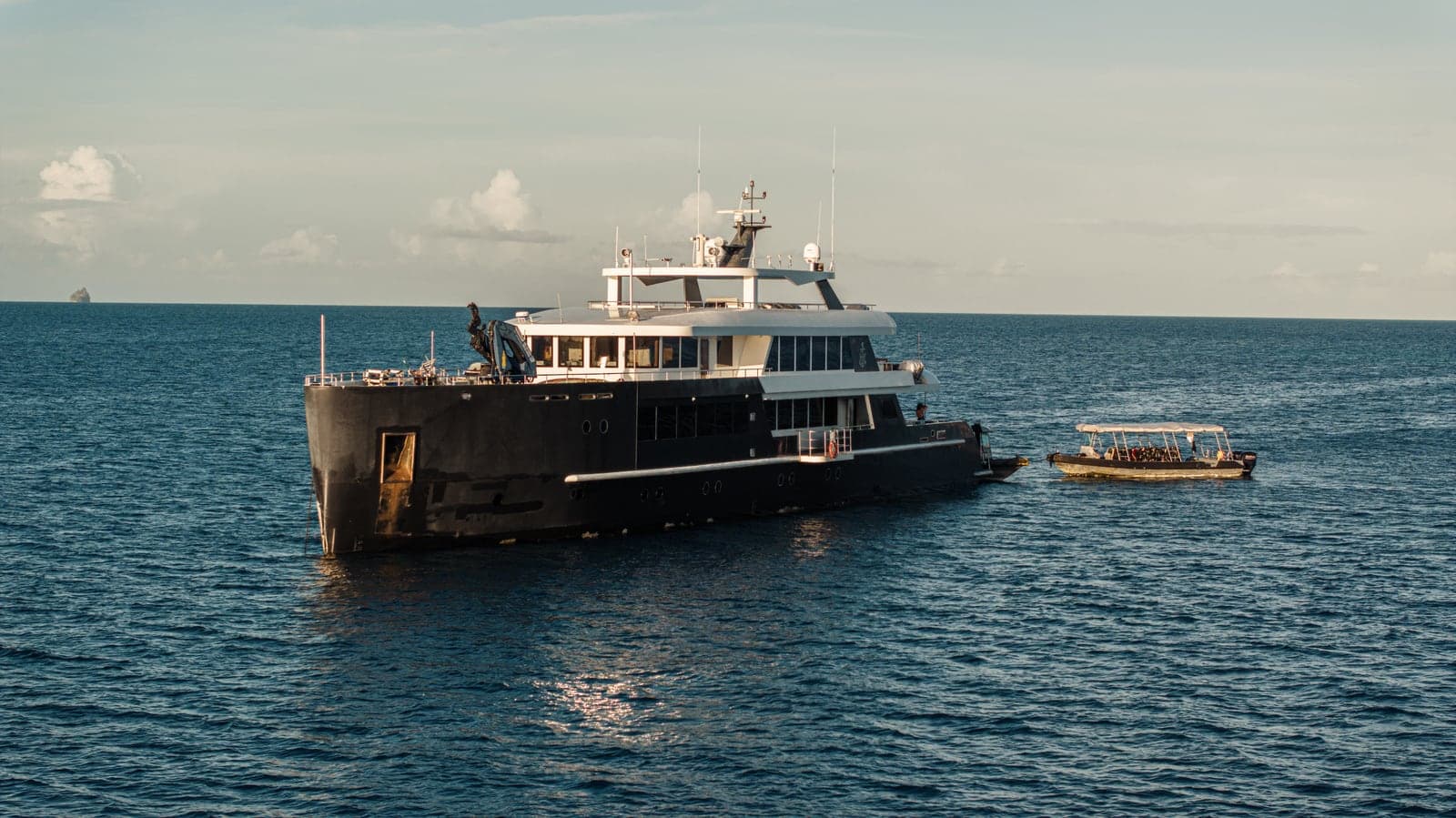
Sophisticated Comfort and Expedition Capability in Palau Built in 2019, M/Y Black Pearl is a 46.8-metre luxury liveaboard combining refined accommodation with the engineering and operational capabilities required for extended diving expeditions. Constructed to demanding international...